
Dive into the world of volume with this hands-on Measuring Capacity Resource! Designed specifically for Kindergarten and 1st-grade learners, this resource simplifies the abstract concept of capacity by using relatable objects and interactive activities.
Students will move beyond simple observation to physically explore what it means for a container to be full, half-full, or empty. From “Filling the Container” with classroom manipulatives to a “True or False” capacity scavenger hunt, this unit provides the repetition and engagement needed to master early volume standards.
What’s Included in This Unit:
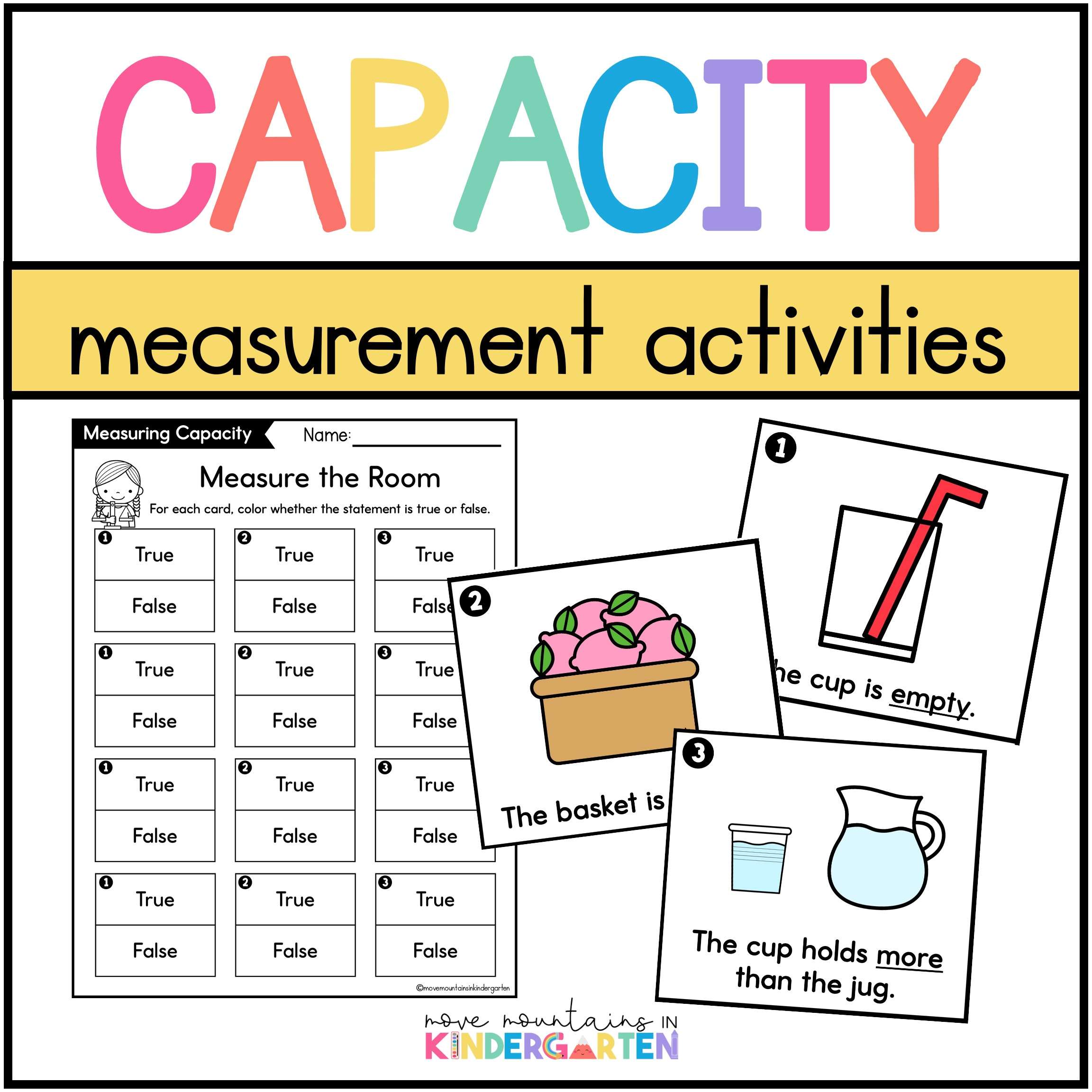
1. Capacity Scavenger Hunt (Measure the Room)
- 12 Task Cards: Images of common containers (soda bottles, measuring cups, oil bottles) showing various levels of liquid.
- True or False Recording Sheet: Students find the cards around the room and evaluate a statement (e.g., “The bottle is full”) to determine if it is true or false based on their observation.
2. Concept Building & Vocabulary
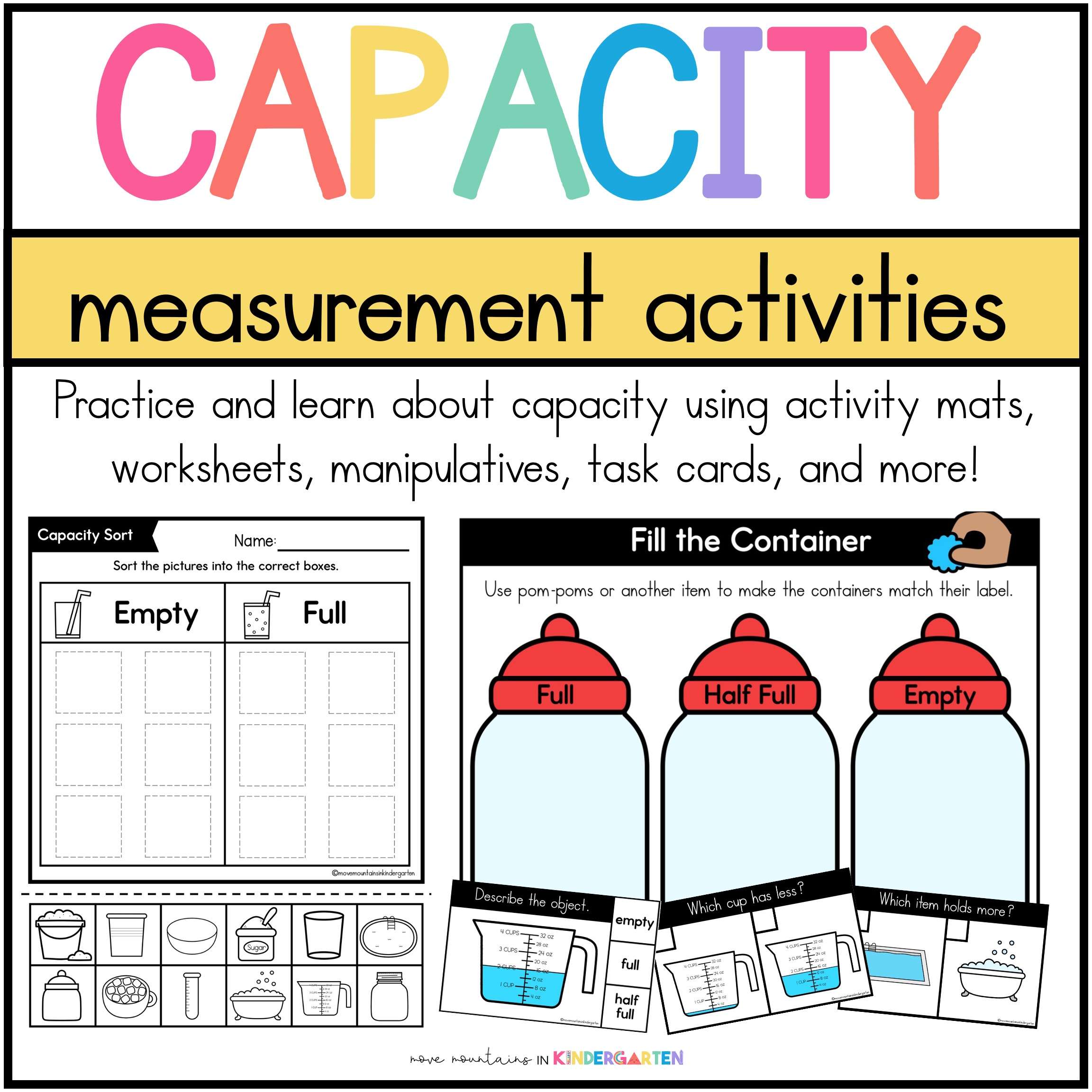
- Full vs. Empty Sort: A cut-and-paste activity where students categorize containers like sugar jars, cups, and bowls based on their current capacity.
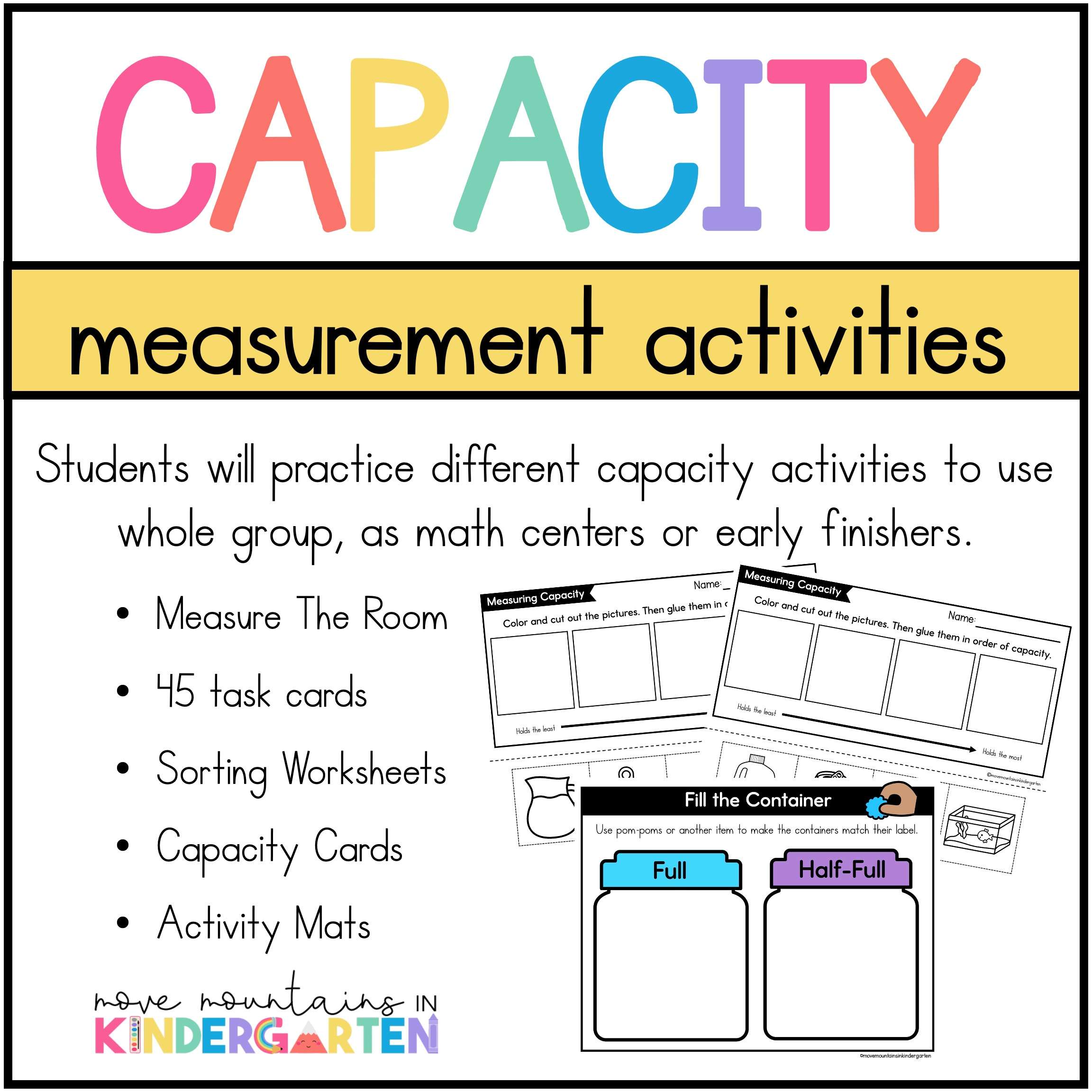
- “Fill the Container” Mats: Interactive pages where students use real manipulatives (pom-poms, beads, or rice) to demonstrate their understanding of Full, Half-Full, and Empty.
- Which Holds More?: Visual comparison worksheets to help students identify which of two containers has a larger capacity.
3. Critical Thinking & Relative Capacity
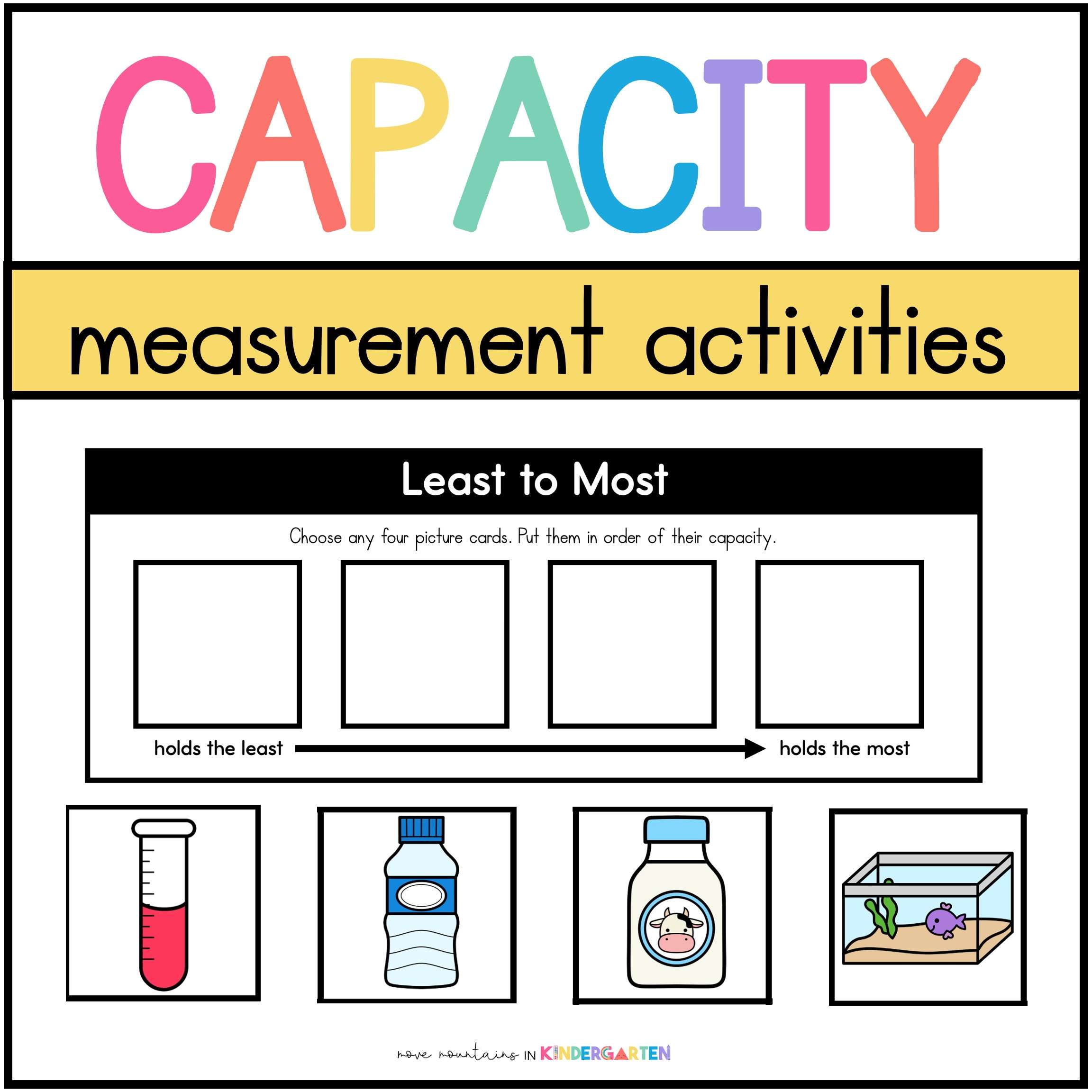
- Least to Most Sequencing: Students cut and glue objects in order from the smallest capacity to the largest.
- The “Draw It” Challenge: A higher-level thinking task where students select a container card and must draw something with a smaller capacity and something with a larger capacity.
Why Teachers Love This Resource:
- Tactile Learning: The “Fill the Container” activities allow students to physically manipulate objects to see volume in action.
- Critical Thinking Integration: The “True or False” and “Draw It” components require students to justify their mathematical thinking.
- Consistent Routine: Follows the same successful format as the other Move Mountains measurement units, making it easy for students to transition to a new skill.
- Zero Prep: Designed to be “Print and Go,” with all necessary task cards and recording sheets included.
How to Use:
- Introduce: Use the “Capacity Sort” to establish the basic vocabulary of full and empty.
- Explore: Set up the Measure the Room task cards to allow students to practice making observations in a “real-world” scavenger hunt format.
- Math Centers: Provide pom-poms or linking cubes for the Fill the Container mats to give students a sensory way to practice volume.
- Assess: Use the Least to Most sequencing page as a final check for understanding of relative capacity.
Perfect for: Kindergarten, 1st Grade, Math Small Groups, and Sensory Science Stations.
Created by: Move Mountains in Kindergarten
If you need measurement activities for kindergarten, my Capacity Resource is one of the 4 activities in my measurement unit.
My capacity resource includes:
-Measure The Room (true or false statements with cards to place around the room)
-Capacity Sort- cut and paste (empty vs. full and least to most)
-Capacity Order- cut and paste
-Fill The Container Activity Mats
-Draw It Capacity Activity Mat
-40 Different Capacity Cards
-45 Capacity Task Cards
The capacity activities and worksheets come in black and white and color versions.
These are perfect in a kindergarten or first grade classroom for your measurement unit to use in a whole group, review, small group, pre-assessment or post-assessment, centers, or early finishers.


Reviews
There are no reviews yet.